
Our Mission
To enrich the human experience through intelligent, accessible technology—built for all.
Our Vision
To augment human potential through biologically inspired innovation and autonomous systems.
Road fatalities exceed 1.3 million annually (WHO), mostly affecting pedestrians and vulnerable road users.
Leading Causes of Accidents
- Distraction
- Substance abuse
- Speeding
- Reckless driving
- Fatigue
- Low visibility
Benefits of Autonomous Vehicles
- Full attention on the road—no distraction or fatigue
- Compliance with traffic laws 24/7
- Advanced 360° perception using stereo camera technology
- Proactive collision avoidance
- Frees up passenger time for productivity or rest
Sensor Comparison
- Camera: High-res, low-cost, real-time object detection
- Radar: Weather-proof, limited resolution
- LiDAR: High precision, expensive, weather sensitive
Why Cameras? Biological vision systems inspire our use of cameras to emulate human-level perception—depth, object recognition, and contextual understanding.
Vision-Based Capabilities
- Object detection and tracking
- Depth and texture analysis
- White balance & colour correction
- Contextual awareness for real-time driving decisions
Sensor Technology Breakdown
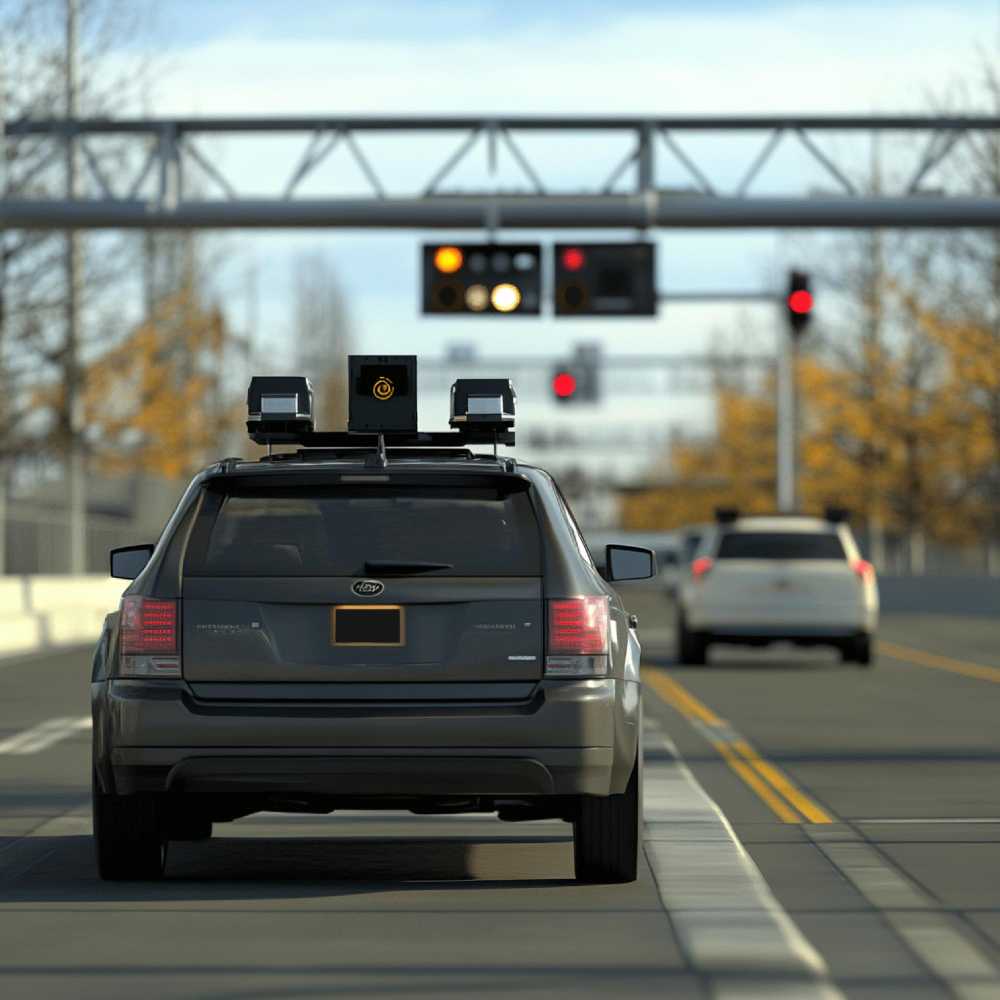
OPTICAL CAMERA
Advantages
- High resolution
- Low cost
- Object recognition possible
- Seamless integration with vehicle aesthetics
- Depth estimation possible via stereo setup
- Effective at detecting various obstacle sizes
Disadvantages
- Susceptible to lens distortion
- Limited dynamic range
- Affected by sunlight glare
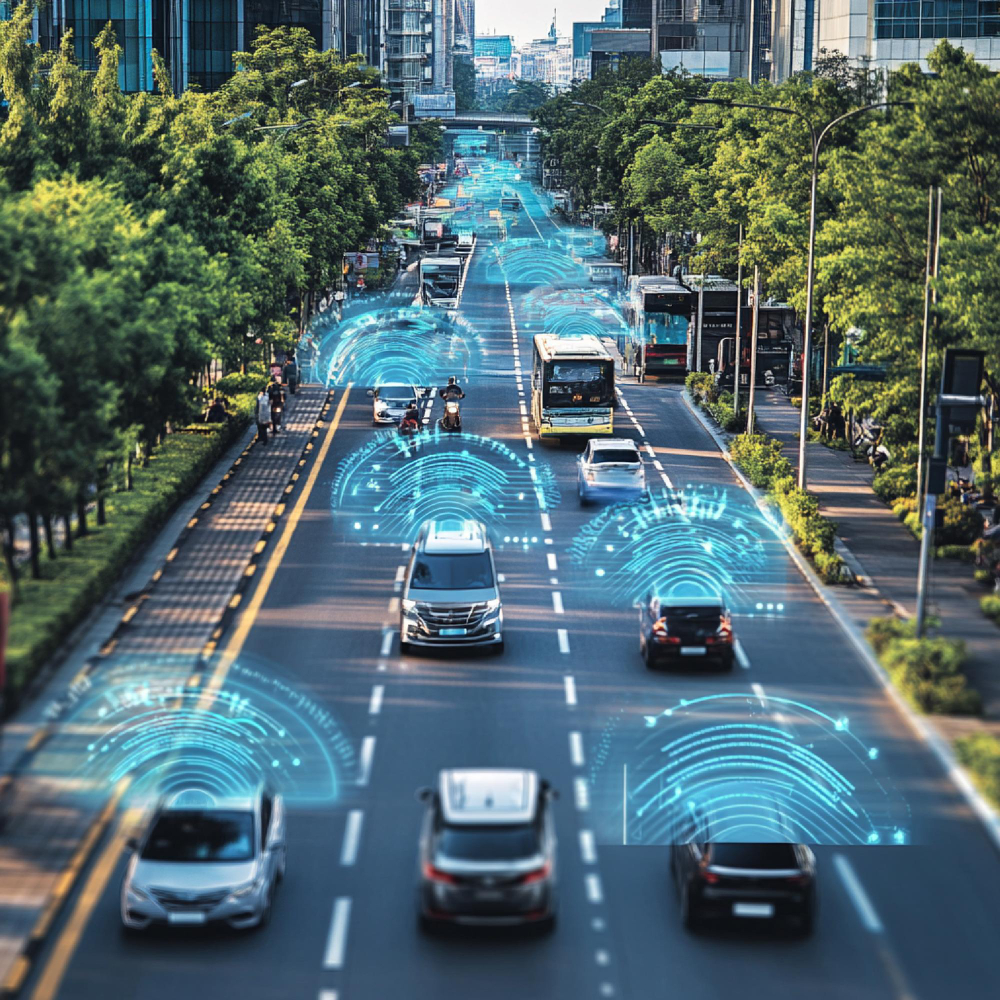
RADAR
Advantages
- Operates in all weather conditions
- Strong detection range
Disadvantages
- Very low image resolution
- Cannot identify road signs or objects visually
- Limitations in obstacle size detection
- May not aesthetically integrate well with vehicle design
- Accuracy can vary depending on obstacle type
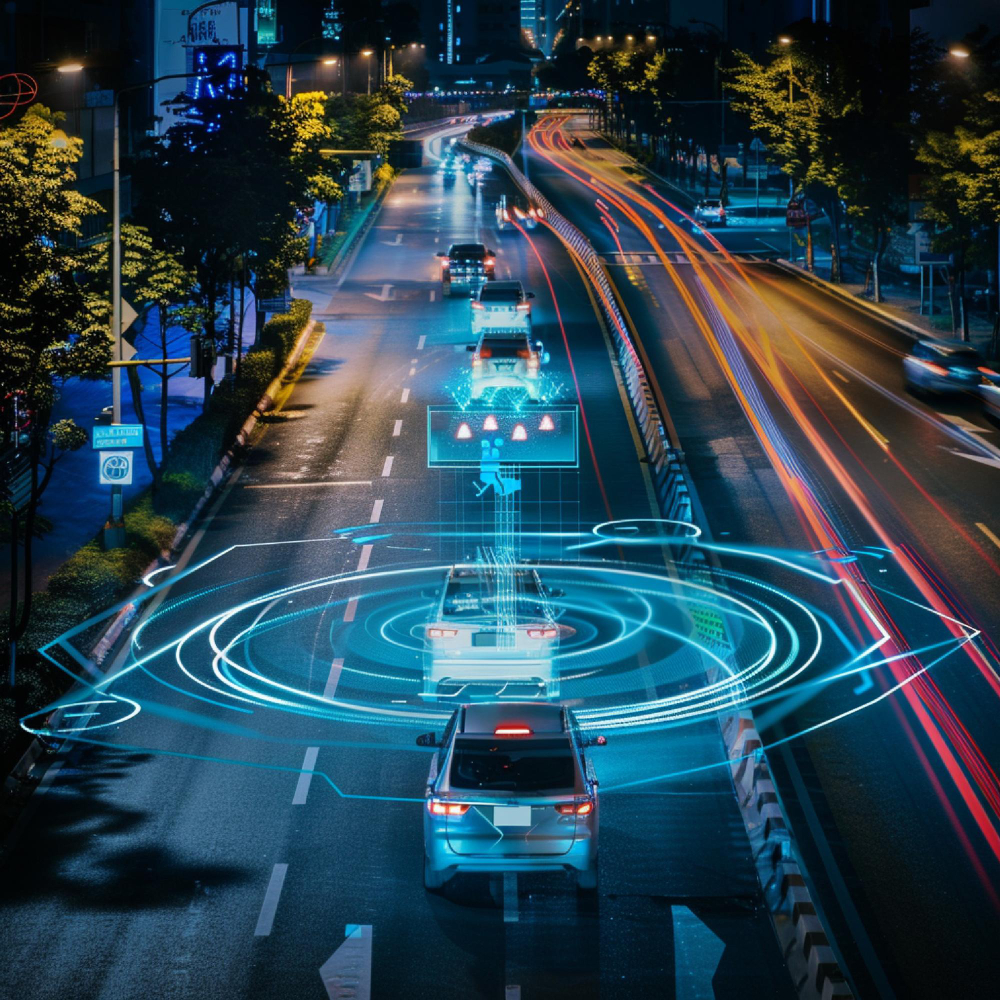
LIDAR
Advantages
- Highly accurate depth estimation
- Reliable detection range
- Excellent precision for mapping and environment perception
Disadvantages
- Vulnerable to interference
- Expensive to implement at scale
- Weather conditions can reduce performance
- Cannot recognize objects such as signs visually
- Aesthetic integration challenges
- Potential eye safety risks due to laser intensity
What Sets Us Apart
While many rely on conventional AI methods such as neural networks, we take a fundamentally different approach. Our systems are built from the ground up using models that replicate the human visual system at a cellular level. Inspired by neuroscience, our process begins with research into biological interactions, which we then transform into interpretable and testable computer programs.
This method ensures transparency, adaptability, and scalability—enabling us to develop reliable solutions for some of the world’s most complex technological challenges, such as achieving Level 5 vehicle autonomy. Our technology is not a black box; it’s a scientifically grounded system modelled after nature itself.
Mollorobotics was founded in 2019 by Shaun Sipumeze Mkhohliwe, a self-taught programmer and visionary with a lifelong dream of creating intelligent, human-augmenting robots. Growing up with limited resources, Shaun pursued knowledge relentlessly—eventually teaching himself Python and C++ as part of his journey to develop real-world solutions.
Later in 2019, Shaun met Lebogang Sehlapelo, an equally driven technology enthusiast. Together, they laid the foundation of Mollorobotics, transforming years of research into working software prototypes and, now, scalable tech products.
Although the original bio-inspired model dates back to 2008, it has evolved over more than a decade into systems capable of real-time tracking, vision processing, and motion prediction. The name Mollorobotics is derived from the Xhosa word “molo”, meaning “hello”—a symbol of the awakening of intelligent machines and the first steps toward truly autonomous human-robot interaction.
We look forward to the day a robot will independently respond, “Hello, world.”